
How to check blood pressure at home, and when to take the readings
How to prepare, position the cuff, choose an arm, follow the right schedule and act on an unexpected high reading.
Updated 5 min read
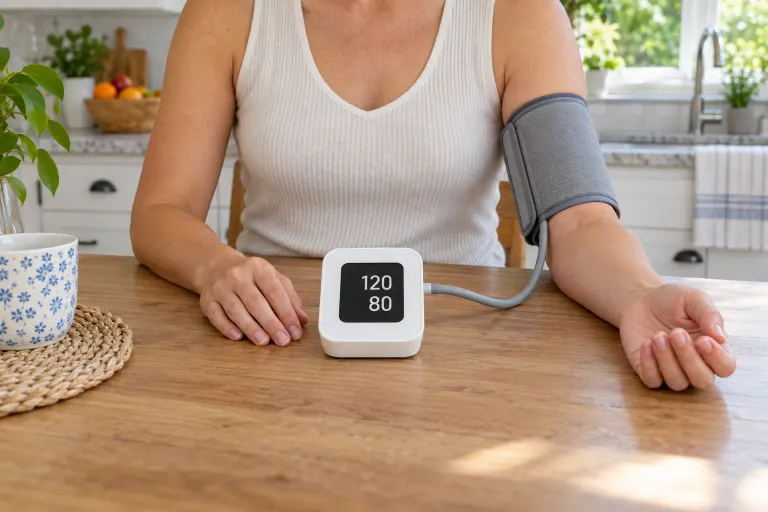
Sit quietly for five minutes, then support your bare upper arm at heart level and keep still while the cuff runs. Take two readings one minute apart and record both, as the American Heart Association advises. Follow the schedule from your clinician or the guidance that applies where you live because home protocols differ.
Which monitor
Use a validated automatic upper-arm monitor with a cuff that fits your arm. The American Heart Association recommends this type of monitor. It does not recommend wrist or finger devices because their readings are less reliable.
Measure around your upper arm and choose a monitor with the correct cuff size, as the American Heart Association advises. UK NICE NG136 also specifies a cuff size appropriate for the person’s arm.
Before you press start
For 30 minutes before the reading, do not smoke, drink caffeine or exercise. Empty your bladder. Then take at least five minutes of quiet rest without talking or using your phone. These preparation steps come from the American Heart Association’s home monitoring guidance.
How to sit
Sit quietly with your arm outstretched and supported. In the UK pathway, NICE NG136 specifies this position. The American Heart Association adds that the arm should rest on a flat surface at heart level. Put the cuff on a bare upper arm rather than over clothing.
Which arm should you use?
Either arm usually works. The American Heart Association says there is not usually a large difference between them.
In the UK pathway, NICE NG136 says to measure blood pressure in both arms when checking for high blood pressure. If the readings from the two arms differ by more than 15 mmHg, measure both arms again. If the difference remains above 15 mmHg after that repeat check, use the arm with the higher reading for later measurements.
When to take the readings
A common schedule is morning and evening at consistent times, as used in the ESC 2024 home protocol. The American Heart Association advises taking two readings one minute apart at each session and recording both.
Use the schedule your clinician gave you. If you do not have one, follow the applicable local guidance because the timing and number of days can differ by country and purpose.
How many days
How many days you measure depends on the protocol, so follow the schedule your clinician gave you. Under the ESC 2024 home protocol, measure for 3 to 7 days, with two readings in each morning and evening session. ESC averages all readings from that period.
For UK adults using home monitoring to confirm a hypertension diagnosis under NICE NG136, take morning and evening readings for at least 4 days, ideally 7 days. Discard every reading from day one before averaging the rest.
If you use the average blood pressure calculator with the NICE routine, omit the first-day readings before entering the remaining readings.
What to do with a high reading
If your systolic reading is above 180 mmHg or your diastolic reading is above 120 mmHg, and you also have chest pain, shortness of breath, back pain, numbness, weakness, a change in vision or difficulty speaking, the American Heart Association says to call emergency services immediately. Do not wait to retest.
Otherwise, repeat an unexpected high reading and record both results. Follow the plan your clinician gave you. Contact a healthcare professional if you are concerned, as the American Heart Association advises.
If your initial systolic reading was above 180 mmHg or your initial diastolic reading was above 120 mmHg, and you do not have any of the listed symptoms, wait at least one minute and test again. If your systolic reading is still above 180 mmHg or your diastolic reading is still above 120 mmHg, contact your healthcare professional immediately.
Do not use these thresholds to dismiss a lower result that concerns you.
The blood pressure calculator can place one reading in a selected reference range. A category is not a diagnosis or a personal treatment target.
Writing it down
Write down both readings from each session and the time. You can also record heart rate and a note about anything you want to remember. The American Heart Association advises recording every result rather than selecting one.
The printable blood pressure log provides spaces for these details. How to keep a blood pressure log explains how to organize the record.
In BP Diary, you can photograph your monitor’s display and check the numbers or enter a cuff reading manually. The diary keeps the time and optional note with the reading, and you can review your history or create a report. BP Diary can also estimate blood pressure through a separate camera scan. That estimate does not come from the photo of your monitor’s display and is not a substitute for cuff measurements requested by your clinician.